
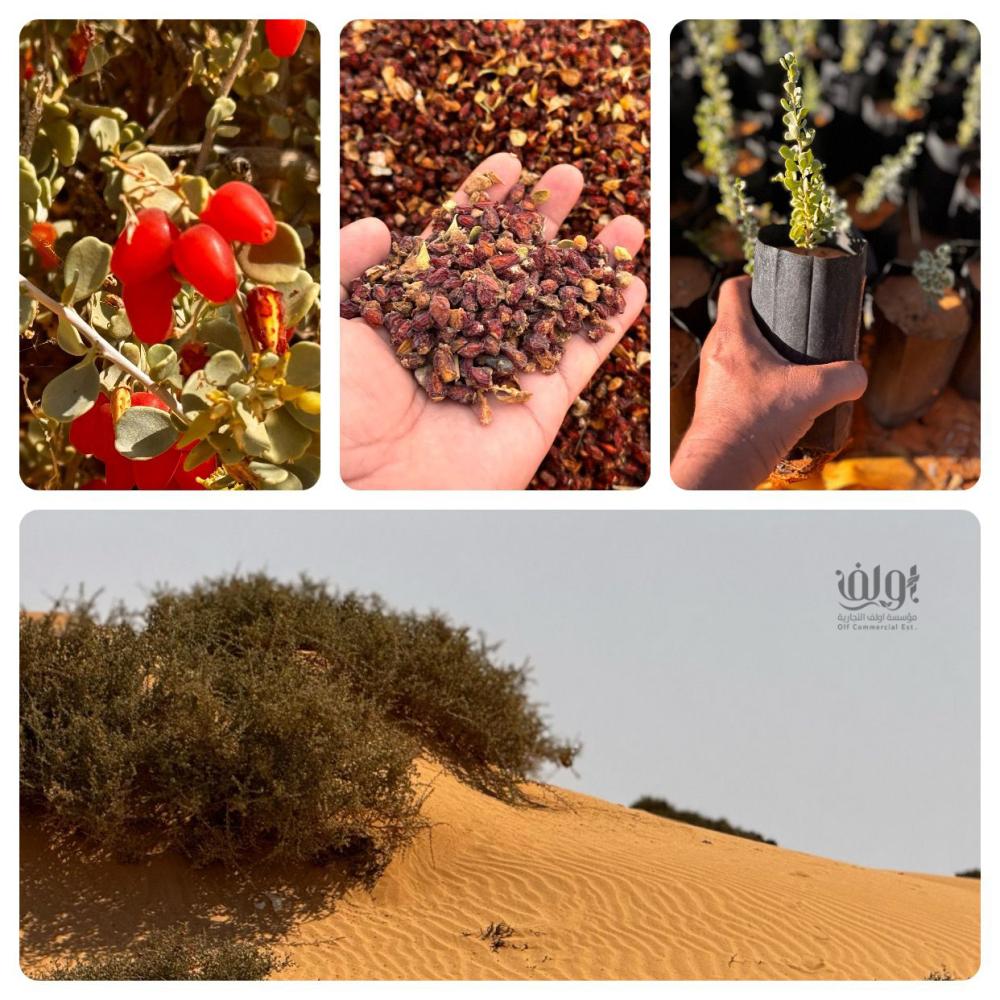
Chickadee (Nitraria retusa)
Salt hyacinth , also called salt hyacinth , is an evergreen desert shrub of the Nitrariaceae family, known for its high tolerance to salinity and drought, and its ecological role in stabilizing sand dunes and protecting soil in arid and semi-arid environments.
Naming and classification
- Kingdom: Plantae
- Order: Zygophyllales
- Family: Nitrariaceae
- Genus: Nitraria
- Species: Nitraria retusa
Common synonyms: Gharqad, Ghardaq, Abel/Ubail in some coastal environments, and may be known locally in parts of the Arabian Peninsula by names describing its saline nature or dense shrubbery.
Etymology: The species name retusa refers to a “slightly concave/shorn” morphological edge or tip on some leaves or petals, while the Arabic name “al-gharqad” refers to the dense thorny shrubs in sandy areas.
Morphological description
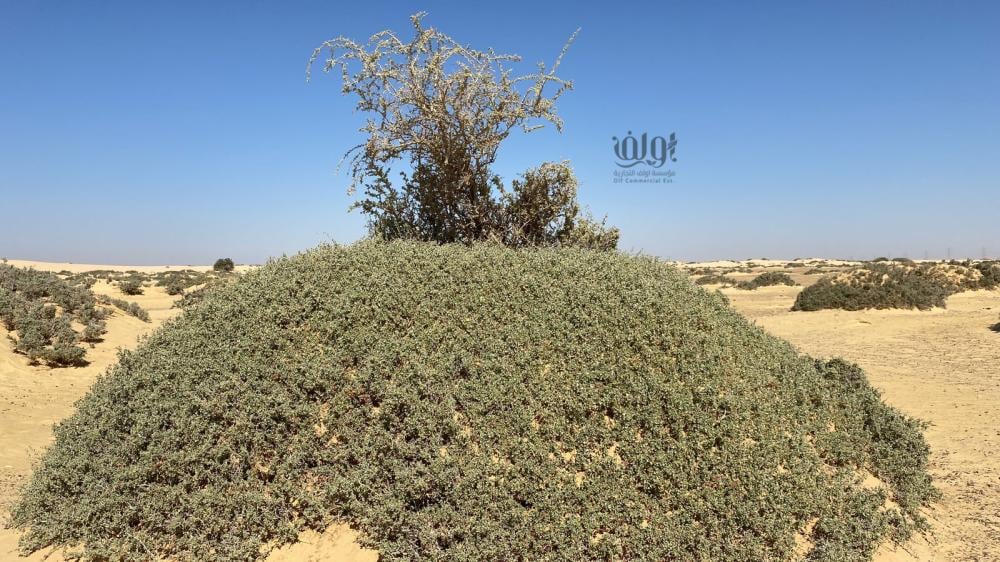
- General appearance: A dense, tangled shrub, often 1–3 m tall, but may exceed this in sheltered locations.
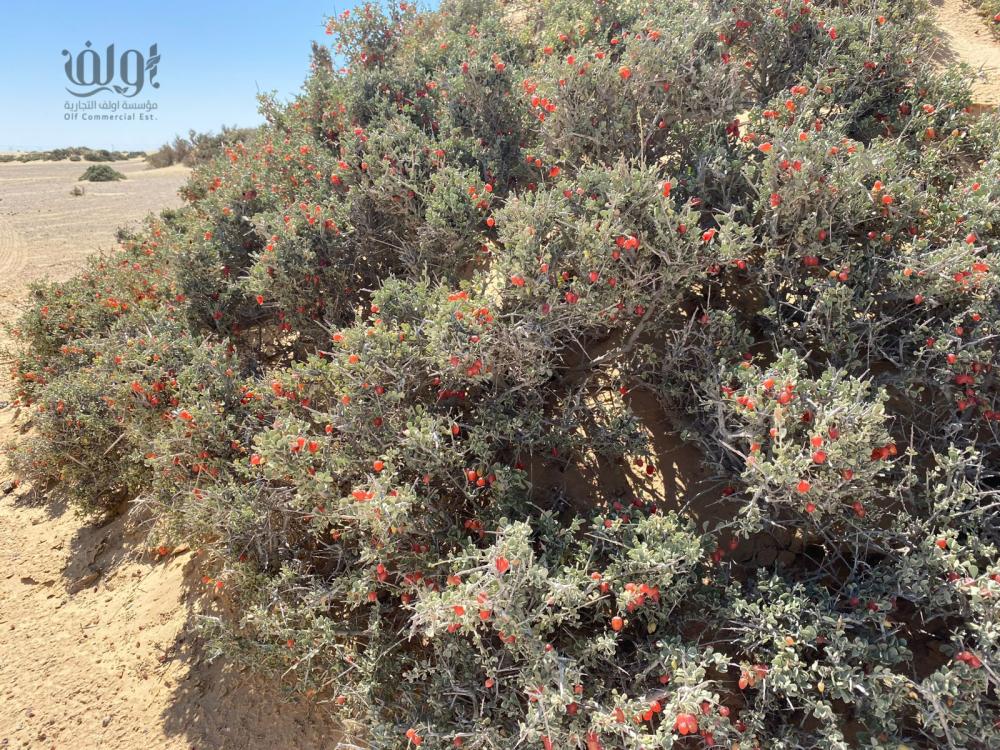
- Leaves: Simple, thickly fleshy, ovate to obovate, bluish-grey green, covered with a waxy layer that reduces transpiration and water loss.
- Flowers: Small, yellowish-white, pentagonal, usually blooming in late winter to spring depending on latitude and climate.
- Fruit: Small, spherical berries that turn bright red when ripe and may turn black, with a sweet, tangy taste.
- Roots: Deep taproot with an extensive lateral network, allowing the plant to capture deep moisture and bind sand.
Habitat and distribution
The gharqad kalil is naturally distributed in North Africa (Egypt, Libya, Tunisia, Algeria, Morocco) and its eastern coast, across the Sinai and northern and inland Arabian Peninsula, reaching parts of the Levant and the salty coasts of West Asia.
It is located on:
- Coastal and inland sand dunes.
- Saline lands (sabkhas) and their edges.
- Light, poor, well-drained soils.
Environment and Adaptation
- Salinity tolerance: One of the most prominent halophyte plants, it can tolerate high salt concentrations in soil and water.
- Drought and heat tolerance: Growth stops in extreme heat while the leaves remain, then resumes when humidity and milder conditions are available.
- Soil stabilization: Its root system and intertwined branches limit sand erosion, making it an essential component of stabilizing dune belts.
- Biotic symbiosis: Provides a small habitat for reptiles and invertebrates and food resources for birds when the fruits ripen.
Similarity and distinction
It may be difficult for a non-expert to distinguish it from other desert shrubs, but:
- The fleshy, grayish-waxy leaves are a distinctive feature.
- Small, red, relatively clustered berries.
- Remarkable salt tolerance compared to its non-halophytic desert relatives.
Life cycle and flowering
- Flowering: Mostly from late winter to spring (may extend locally to early summer depending on climate).
- Fruiting: Summer and early fall, with timing varying depending on location, temperature, and humidity availability.
- Age: A relatively long-lived perennial shrub in established natural sites.
Propagation and Cultivation (A Practical Guide)
- Seed propagation:
- It is extracted from ripe fruits, cleaned and dried in the shade.
- Suggested initial treatment: Soak seeds for 12–24 hours in lukewarm water, or lightly scarify the seed coat to improve germination.
- Germination medium: Light, well-drained mixture (clean sand + peat moss/dry sphagnum peat or perlite).
- Germination: In batches; patience is required, and moderate warmth with non-saturated moisture is helpful.
- Semi-woody brains:
- They are taken from one-season-old branches, 10–15 cm long.
- Their bases are dipped in a light rooting hormone, planted in a moist, well-drained medium and partially shaded until they root.
Site requirements
- Light: Full sun is best for good flowering and fruiting; tolerates half shade.
- Soil: Sandy to sandy loam, poor or medium fertility, well- drained.
- Salinity: Tolerates irrigation with relatively saline water; growth slows with very high salinity but remains vigorous.
- Watering: Deep, spaced waterings; allow the soil surface to dry between waterings. Overwatering weakens the roots.
- Distances: 1.5–2.5 m between bushes in environmental preparations and fixing belts (increased or decreased depending on the goal).
Care
- Pruning: After fruiting, remove old branches and stimulate basal branching; maintain a dense structure to hold the sand.
- Fertilization: Light doses in early spring are sufficient (if used), as the plant is adapted to poor soil.
- Pests and Diseases: Generally tolerant; scale insects or aphids may occur in sites of heavy irrigation and excessive shade—treat preventively by improving aeration and careful irrigation, and selectively when needed.
Uses
Environmental
- Sand dune stabilization and protection of fragile coasts and sabkhas.
- Formation of low windbreaks in desertification control projects.
- Support biodiversity by providing fruits and cover for birds and invertebrates.
Food and traditional
- The fruits are eaten fresh or dried; they have a sweet and tangy flavor and may be used in local drinks.
- In some rural settings, a simple jam or paste can be prepared from the fruits.
Pastoral
- A supplementary resource for camels and some ruminants during periods of scarcity, taking care not to overgraze in order to preserve natural regeneration.
Popular medicine (alert)
- Traditionally used for mild digestive and respiratory purposes; these are traditional uses that do not replace medical advice , and pregnant women and chronic patients are not advised to use without a specialist's advice.
Phytochemistry (General Features)
- Plant parts (especially the fruits and leaves) contain phenolic compounds and antioxidants in varying proportions, which explains the pungent taste and some of the popular uses. Concentrations vary depending on habitat, salinity, and phenological stage.
Conservatism and environmental sensitivities
- Threats: Indiscriminate uprooting, overgrazing, dune clearance, and land use conversion.
- Recommendations: Collect selected seeds from multiple sources to preserve genetic diversity, regulate grazing, and use it in coastal and desert reclamation programs.
In culture and language
- The gharqad appears in Bedouin dialects and desert poetry as a sign of salt sand habitats and small hunting grounds.
- Some local names are derived from its salty quality or its dense, spiny appearance.
Brief comparison with closely related species
- Nitraria sibirica : Its range is wider continentally towards Inner Asia; its leaves are relatively smaller in some populations.
- Nitraria schoberi : Prefers saltier, more continental plains; differences are subtle and require specialized botanical examination.
Notes for Growers and Seed Dealers
- Selecting reliable seed sources maintains consistency of tolerance traits.
- His best environmental sales are with his anchor project packages and windbreaks , and with coastal salt gardeners.
- Care label recommendation: “Halt-tolerant plant—well-drained soil, full sun, deep, spaced watering.”
See also
- Halophytes and combating desertification
- Afforestation of coasts and salt marshes
- Saltwater management in landscape agriculture