
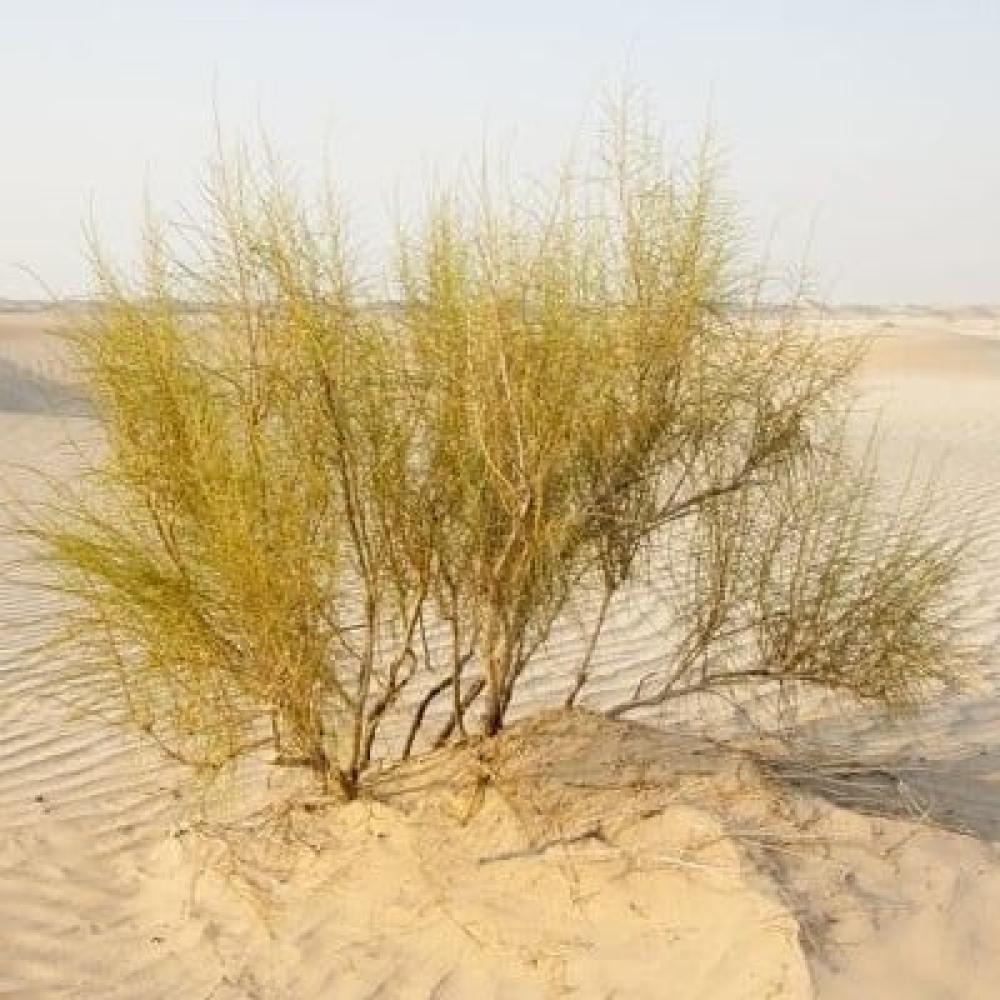
Arabic name: Ghadda tree
Latin genus name: Haloxylon Ammodendron
Plant type: Perennial - evergreen
Crop planting time: from late spring to early summer (10-23°C)
Cultivation method: seeds-seedlings
The ghada tree seeds collected from the plowing site contain between 300 and 5,000 seeds ready for planting.
Growing sagebrush seeds will require a very sunny location and well-drained, infertile soil. Sagebrush can tolerate salty and alkaline conditions.
The spongy, saturated roots of the ghada tree can be pressed to extract potable water, a use that has been important for nomadic peoples in the deserts of Central Asia throughout history. The tree's wood is also used as fuel for fires for heating and cooking, and also provides fodder for livestock.
A thornless shrub that grows in the sandy, saline soils of northern Saudi Arabia. It features slender branches and evergreen leaves, reaching a height of two meters and boasting scant flowers during the summer. This plant thrives in light, sandy, and clay soils and is tolerant of high salinity and harsh, alkaline conditions.
Ghadh requires direct sunlight and is drought-tolerant. It propagates naturally by seed and is occasionally attacked by insects. Along with Arta, Ghadh is considered an important local shrub because it provides a source of fuel and food for animals and contributes to sand dune stabilization and environmental improvement. However, Ghadh is threatened by overexploitation of its habitat, in addition to harsh climatic conditions and overgrazing, which are leading to a decline in its population. The regeneration of shrubs is also hampered by the seeds being buried deep in the sand, preventing their growth. Therefore, attention should be paid to planting and maintaining Ghadh due to its importance in sand dune stabilization, afforestation, and windbreaks, given its slow growth and low irrigation and maintenance requirements.
HALOXYLON AMMODENDRON
The tamarisk tree (Haloxylon ammodendron) is an evergreen plant that grows to about 2 m (6 ft 7 in) tall.
These plants bloom from June to July. These hermaphrodite species (having both male and female organs) thrive in light (sandy) and reactive soils. They prefer dry, well-drained soils and can also grow in nutrient-poor soils.
The ghada tree is widely distributed across several countries in West and Central Asia and North Africa, with the Arab region being one of the most prominent regions where this plant grows.