
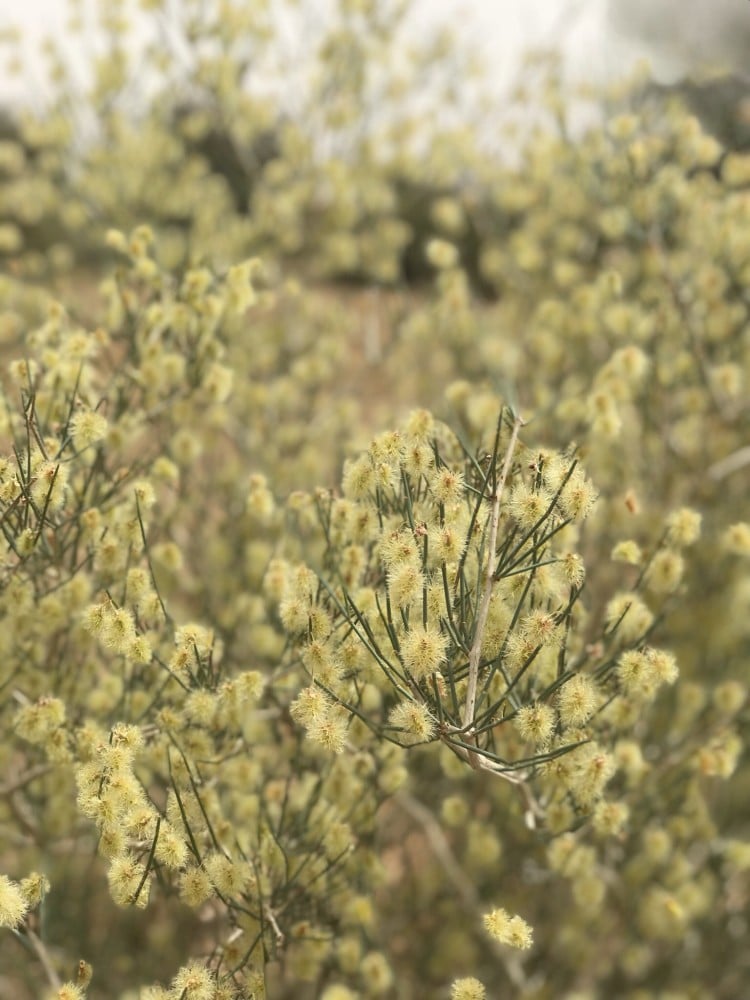
Arta is a long-lived desert tree characterized by its dense, irregular trunk and deep roots. It is one of the main plant species in the Arabian desert, providing food for animals. It also contributes to maintaining the balance of the desert environment, combating desertification, blocking sand encroachment, and calming sandstorms.
Scientific name: Calligonum Comosum
Other names: Arta, Abel, Tib, Arta, Able, Rasma.
Family: Polygonaceae.
The local occurrence of this plant occurs in Saudi Arabia, the Sinai Desert, and Egypt.
Flowers: Dense, small, and petalless, they are yellowish-white and fragrant. The fruit is deep red.
Leaves: leafless.
The estimated height is about two and a half meters.
Arta cultivation and environmental conditions:
Arta tolerates dry conditions and harsh desert conditions, and can be grown in any temperate climate, such as greenhouses. Additionally, it is highly resistant to salinity.
Plants prefer sandy soil with good drainage and aeration.
Watering method: It is preferable to water abundantly at the beginning of the plant’s growth. After the trunk becomes established and grows, watering should be done at intervals according to the weather conditions, soil moisture, and climatic conditions surrounding the plant.
Leaf growth increases in direct sun.
Propagation: By seeds and cuttings.
Planting Schedule: It is replaced in September and can be planted at any time of the year except for weather and environmental conditions indoors.
Flowering date: It blooms in March and April.
Benefits and uses of arta:
- It was used by Arabs in ancient times in tanning leather.
- It is used to inactivate many different types of bacteria.
- It is used in the tanning process of leather and clothing.
- Egyptians have used it for more than four thousand years to treat some diseases.
- One of the most widely used trees for firewood.